
150+ Years of Combined Experience. Hundreds of Millions Recovered.

Tampa Premises Liability Lawyer
If you were hurt at a store, an apartment complex, or a pool, a Tampa premises liability lawyer can work out what the owner owed you. Winters & Yonker has taken on injury claims and nothing else since 2001. The consultation is free.
Get My Free Case Review
Free consultation, no obligations. If you would rather not type, (813) 223‑6200 is available 24/7.
Aggressive Tampa Premises Liability Attorneys
Premises Liability Starts With Your Visitor Status
Whether a property owner owes you anything at all depends on why you were on their property. Not on how badly you were hurt, and not on how obvious the hazard looks afterward. Florida sorts visitors into three categories, and each one is owed a different duty.
A Tampa premises liability lawyer can help determine which category applied to you and what the owner was required to do about the hazard that injured you. Winters & Yonker has represented injured people across Tampa Bay since 2001. Our attorneys bring more than 150 years of combined legal experience, and the firm has recovered hundreds of millions of dollars for injured clients. The consultation is free.
Children get extra protection. An owner has to take reasonable care to keep kids away from hazards that draw them in, like pools and heavy machinery. That holds even when the child had no permission to be there. In practice, it usually means a barrier.
An owner’s own inspection and repair records often show which duty was met. Our in-house litigation team asks for those records early and prepares a premises liability case for court from the start.
The Duty Owed by Florida Property Owners Depends on Your Status
Under Florida premises liability law, property owners have to keep their premises in a reasonably safe condition. How far that obligation extends depends entirely on the status of the person who gets hurt.
Invitees: Customers Owed the Highest Duty
An invitee enters with express or implied invitation, for the owner’s benefit. A customer in a store, a visitor to a museum, anyone on a property that is open to the public for business. Invitees are owed the highest duty of care. The owner has to keep the premises reasonably safe, repair known hazards, warn about non-obvious dangers that cannot be fixed immediately, and inspect the property regularly to find dangerous conditions.
That inspection requirement is the part that matters most in a claim. Because an owner has to look, they can be liable for a hazard they should have known about, not only one they actually knew about.
Licensees: Social Guests and Hidden Dangers
A licensee has permission to be on the property but is there for their own purposes rather than the owner’s. A social guest at a house, or someone who steps into a shop to use the restroom without buying anything.
Owners have to warn licensees about hidden dangers they know about and use reasonable care in maintaining the property. They do not owe a licensee a duty to inspect for dangers they do not know about, which is the practical difference between this category and the one above it.
Trespassers and the Duty in Section 768.075
A trespasser is on the property without permission and is owed the least. An owner owes no duty at all to a trespasser they do not know about, though they cannot deliberately set out to injure one. Once an owner discovers a trespasser, Florida Statutes section 768.075 requires them to warn of known dangers that are not obvious.
Being classified as a trespasser is not automatically the end of a claim, and the classification itself is frequently contested. Property owners and their insurers have an obvious interest in arguing that an injured person was somewhere they should not have been.
Children and the Attractive Nuisance Doctrine
The attractive nuisance doctrine is the exception that matters most. A property owner has to take reasonable care to prevent foreseeable harm to children caused by things on the property that draw them in, even where the child had no permission to be there.
Heavy machinery, appliances, and swimming pools are the usual examples. The obligation is to make reasonable efforts to keep children from reaching the hazard, which in practice usually means a barrier.
Swimming Pool Drowning Claims
Pools carry their own requirements under Florida law, and drowning claims follow rules of their own. We cover those on our swimming pool drowning page.
Case Results
Hundreds of Millions Recovered Since 2001
- $400,000Trip and fall
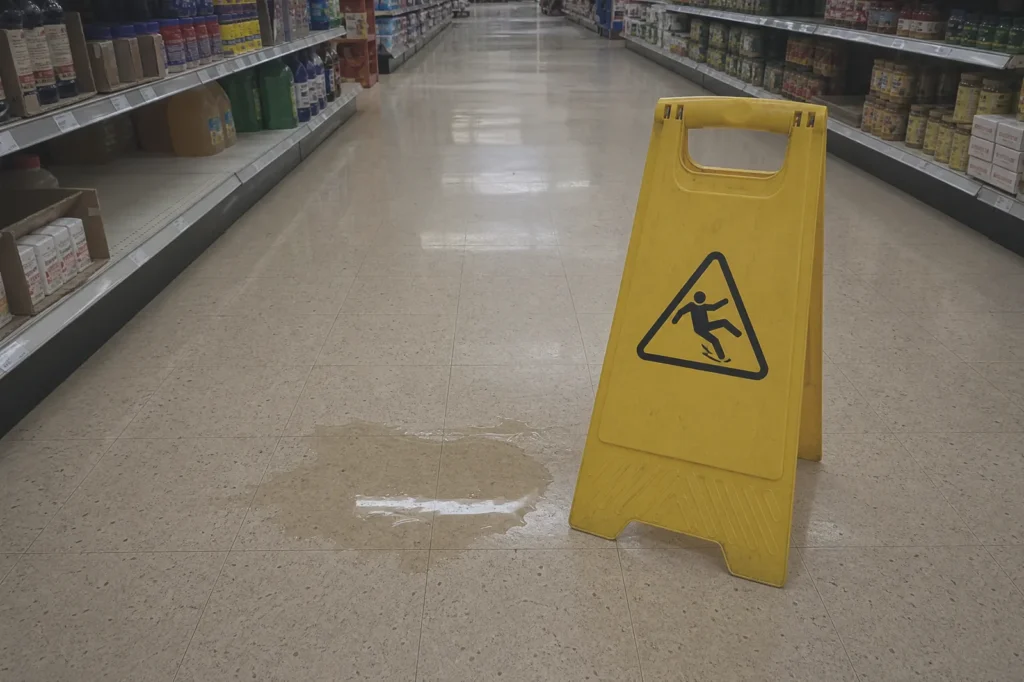
- $300,000Slip & fall
Figures are shown before attorney fees, case costs, and medical liens. Past results do not guarantee or predict a similar outcome in any future case.
Hazards That Produce Premises Liability Claims
Premises liability covers anything dangerous about a property rather than any single kind of accident. The hazards that generate claims most often:
- Slip and fall and trip and fall hazards
- Inadequate security
- Dog bites and animal attacks
- Assaults on the premises
- Swimming pool and drowning hazards
- Elevator and escalator failures
- Playground and amusement park hazards
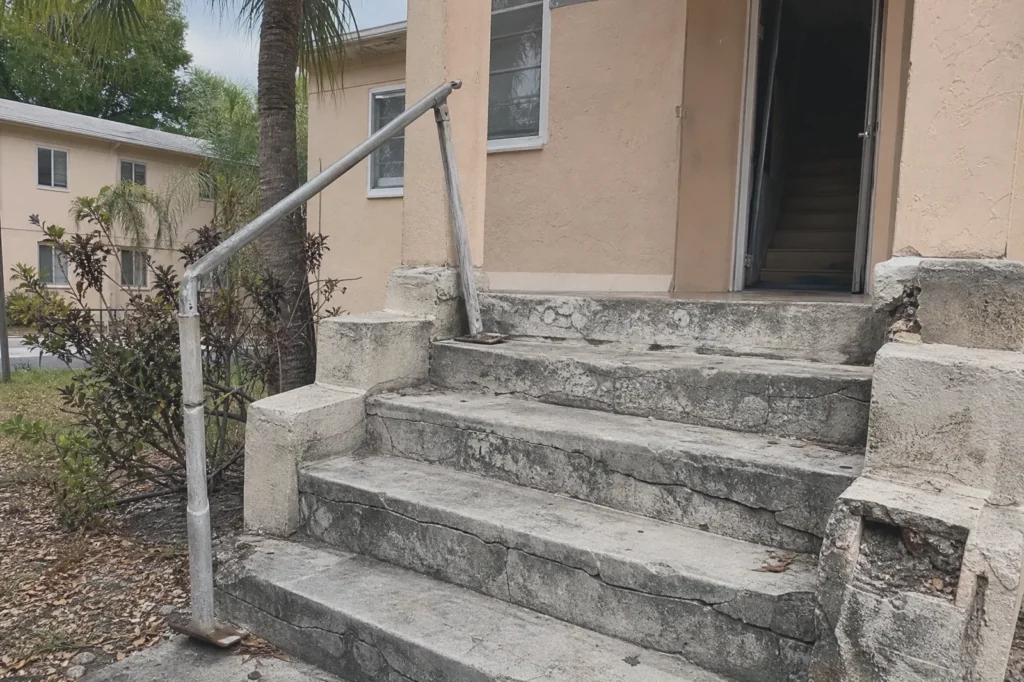
- Hazards in parking lots and stairwells
- Hotel, motel, and short-term rental hazards
- Fires and inadequate exits
- Bed bugs and vermin
- Exposure to toxic substances
- Poorly maintained and defective property conditions
What connects them is not the injury but the question underneath it. Did the owner know, or should they have known, and what did they do about it.
Valuing a Tampa Premises Liability Claim
Several factors carry most of the weight:
- The type of injury and its severity
- How the injury affects daily activities and the ability to work
- Medical expenses already incurred and still to come
- Time missed from work and lost wages
- Whether insurance covers the accident
- Who owns the property, and what coverage they carry
Property Ownership and the Claim
That last factor is specific to these claims. A national retailer, a small business, a landlord, and a homeowner each carry very different coverage, and the identity of the owner often decides what is realistically recoverable.
Damages in a Premises Liability Claim
Florida separates losses you can prove with records from those that are harder to put a number on. A claim may include both. Losses that can be documented:
- Medical expenses, including future treatment and rehabilitation
- Lost income from work
- Diminished earning potential
- Out-of-pocket expenses
Non-Economic Losses: Pain and Suffering, Mental Anguish
- Pain and suffering
- Mental anguish
- Inconvenience
- Loss of quality of life
- Disfigurement and scarring
Shared Fault in a Premises Liability Claim
Property owners and their insurance companies argue shared fault in almost every one of these cases. The hazard was obvious. You were looking at your phone. You were wearing the wrong shoes. Being partly at fault usually reduces what you can recover rather than eliminating it. If you are found 30 percent at fault, the award is reduced by 30 percent.
The 50 Percent Comparative Fault Cutoff
As of March 24, 2023, a person found more than 50 percent at fault generally cannot recover from the other party, under Florida Statutes section 768.81. Before that date, there was no cutoff, and an injured person could recover a reduced amount no matter how much of the blame they carried. If your injury happened before March 2023, ask which version applies to you.
Injuries in Premises Liability Cases
Because premises claims arise from everything from a wet floor to an assault, the injuries vary enormously. Broken bones, soft tissue injuries, burns, crushing injuries, internal organ damage, and drowning all appear in these cases. So do the injuries that change a life permanently: traumatic brain injuries, spinal cord injuries, and catastrophic injuries such as paralysis and amputation.
The severity of the injury drives the value of the claim, but it does not decide whether there is a claim at all. That still turns on the duty question.
Filing Deadlines for a Premises Liability Claim
Most Florida negligence claims must be filed within two years of the date of injury. That window was shortened from four years on March 24, 2023, so injuries before that date may still fall under the longer one. A wrongful death claim arising from a hazardous property condition carries two years from the date of death, a deadline that did not change in 2023. The evidence deadline is shorter and it is the one that quietly ends these cases. A property owner who learns someone was hurt has every reason to repair the hazard, and once it is fixed, proving it existed becomes considerably harder. Surveillance footage runs on the same kind of short cycle. Both are gone well within two years.
Paying for a Tampa Premises Liability Lawyer
The consultation is free, and there is no cost to find out where your claim stands.
Case costs and expenses are the costs of building a claim, such as filing fees, medical records, and expert witnesses. You pay no attorney fees and no case costs unless we recover money for you. How the attorney fee is calculated, how case costs are handled, and what you would owe in different outcomes are all set out in a written fee agreement that we go over with you before you decide.
Talk to Us Before You Talk to the Insurer
Property owners usually report an injury to their insurer quickly, and that company starts building its version from the first day, and the version it prefers is the one where you were somewhere you should not have been, looking at something other than the floor.
Call us and tell us what happened. We will tell you where you stand. The consultation is free.
Related Claims We Handle
Each of these is a premises claim with its own rules on top of the duty framework above.
-
Slip and Fall Accidents
The most common premises claim, and the one where the owner’s inspection records usually decide it.
Learn More : Slip and Fall Accidents -
Dog Bites
Florida applies a statutory standard to dog bite claims that is distinct from ordinary negligence.
Learn More : Dog Bites -
Negligent Security
Where a criminal assault was foreseeable and the property owner did nothing to prevent it.
-
Swimming Pool Drowning
Pools carry their own barrier requirements, and children are owed protection even without permission.
Learn More : Swimming Pool Drowning -
Wrongful Death
Where a hazardous property condition kills someone, the claim follows a separate framework.
Learn More : Wrongful Death -
All Practice Areas
Not every serious injury happens on someone else’s property. The firm also handles vehicle, workplace, and other injury claims.
Learn More : All Practice Areas
Premises Claim Questions Answered
Does it matter why I was on the property?
It matters a great deal. Florida sorts visitors into invitees, licensees, and trespassers, and each is owed a different duty. An invitee is owed the most, including a duty to inspect, which means the owner can be liable for a hazard they should have found. A licensee is owed a warning about known hidden dangers but no inspection.
Can I recover if I was trespassing?
Sometimes. An owner owes no duty to a trespasser they do not know about, but they cannot deliberately injure one, and once they discover a trespasser they have to warn of known dangers that are not obvious. Children are treated differently again under the attractive nuisance doctrine.
What if the owner fixed the hazard before anyone documented it?
It makes the claim harder and it does not end it. Incident reports, maintenance and inspection records, prior complaints, surveillance footage, and witness accounts can all establish that a hazard existed. Most of that material sits with the property owner, which is why requesting it early matters.
Can I still recover if they say I was partly at fault?
Usually yes, unless you are found more than 50 percent at fault. Florida reduces recovery by your share of the blame, so 30 percent fault reduces the award by 30 percent. Above 50 percent, recovery is generally barred. That cutoff took effect March 24, 2023, so the date of your injury matters.
What does it cost to hire a premises liability lawyer?
The consultation is free. You pay no attorney fees and no case costs unless we recover money for you. How the attorney fee is calculated, how case costs are handled, and what you would owe in different outcomes are all set out in a written fee agreement that we go over with you before you decide.
Our Offices and Service Areas
Our Tampa office is in Hyde Park at 601 W Swann Ave., and we handle Hillsborough County claims through the Thirteenth Judicial Circuit.
The firm also has locations in St. Petersburg, Clearwater, New Port Richey, and Lakeland. Tampa is our staffed office, and the other four are available by appointment.
- Tampa, FL 601 W Swann Ave, 33606
- St. Petersburg* 111 2nd Ave NE, Ste 350, 33701
- Clearwater* 1006 Drew St, 33755
- New Port Richey* 5006 Trouble Creek Rd #200, 34652
- Lakeland* 1543 Lakeland Hills Blvd, Ste 18, 33805
* Available by appointment. Tampa is our staffed office.
Get a Free Consultation
Or call now: (813) 223-6200
Client reviews
What your neighbors say.
★★★★★ 4.6 average on Google across 536 reviews of our Tampa, St. Petersburg, Clearwater, New Port Richey and Lakeland offices.
“I absolutely adore Kara in the office. She has helped me so much by keeping updated and answering any questions I have. I will only use Winters and Yonker for any and all my injurie needs. Mostly because of Kara.”
“My case was nearly 3 yrs, but my lawyer Trevor and his staff was there for me every step of the way. They kept me in the decision making process and with my best interest at the forefront. Definitely the best at what they do!”
“Courteous, caring, always kept in contact and I was always kept up to date with what was going on, it was an awesome experience with Winters in Yonkers”
“Very professional and diligent! They have been helping our family for years and they really care. Mr. Smith treats us well and his team is very good Highly recommend!”
“Chris & Sara were wonderful from start to finish. I felt Chris was engaged through the entire process and though he likely had several clients simultaneously I felt as if I was the only one. Can’t recommend high enough.”
“Excellent service from Matt and Danica. Everything was fully explained from the beginning through to the settlement of my claim. I’d definitely use them again if ever needed. Thanks to the entire firm.”
“Matt an Danica were the best they kept in touch every step of the way an got my case handled quickly I couldn’t be happier with my team at winters an Yonker”
“My experience with Winters and Yonker was excellent from beginning to end. Mr. Smith explain details to me in a simple way. I didn’t have any worries with insurance company, they took care of everything, so I could just worry about getting better. They were all extremely courteous and professional threw the whole process with me, but aggressive with insurance company. I totally recommend them.”
Reviews are from Google and are unpaid. Past results do not guarantee a similar outcome in your case.
