
150+ Years of Combined Experience. Hundreds of Millions Recovered.

How Much Is My Personal Injury Case Worth?
An insurer has put a number on your injuries, and you want to know how much your personal injury case is worth before you answer. This guide from Winters & Yonker, a Tampa injury firm founded in 2001, explains what goes into that value so you can measure the offer against it.
Get My Free Case Review
Free consultation, no obligations. If you would rather not type, (813) 223‑6200 is available 24/7.
Personal Injury Case Value Starts With Its Parts
Nobody can tell you on the first call, and anybody who does is guessing.
What can be explained is what the number is made of, which parts are within your control, and why the average settlement figures you will find elsewhere describe other people rather than you.
The value starts with the losses you can prove. Available insurance caps it, and shared fault and liens reduce it. Future care and lost earning power are often the largest pieces, and they rest on projections from doctors, vocational experts, and economists.
Our litigation team works in-house and documents a claim while treatment continues. The case is ready to value once your doctors can say whether the injury is permanent. That timing keeps an early offer from closing the file against an incomplete record.
Why Average Personal Injury Settlements Describe Other People
Search for what a case is worth and you will find figures. Average settlements for back injuries, for car accidents, for personal injury generally. They look like answers.
They are not, for a reason that is arithmetic rather than legal. An average mixes a sprained wrist that resolved in six weeks with a spinal injury that ended a career, and produces a number that describes neither. Half the cases in any such figure settled for less than it, and the ones that settled for more did so because something specific about them made them worth more.
Identical Injuries, Different Settlements
Two claims arising from the same crash, with the same injuries, routinely resolve at different figures. The difference is the evidence, the coverage, and how the claim was handled.
Average Settlement Figures Online
The aggregator sites publishing those averages have an obvious reason to. A number holds attention in a way that an explanation does not, and somebody who has just been hurt wants a number more than they want a method. The difficulty is that acting on one leads people to accept offers they should have questioned, and to reject offers that were reasonable.

Florida Personal Injury Damages a Claim Is Built From
Florida separates what a claim can recover into three categories, and they are proved in different ways.
Economic Damages
The losses with a document behind them. Medical bills already incurred, the cost of treatment still to come, lost income, reduced earning capacity, rehabilitation, assistive equipment, home modification, and out-of-pocket costs.
These are the easiest to prove and the easiest to undervalue, because the future portion is the larger one and it has to be established rather than counted. What treatment will cost over a lifetime, and what a career would have earned, are questions for life care planners and economists rather than for arithmetic.
Non-Economic Damages
Pain and suffering, mental anguish, inconvenience, disfigurement, and the loss of things you used to do. Real losses with no invoice attached, which is what makes them contested. We set out how these are calculated separately.
Punitive Damages
Rare, and different in kind. These punish conduct rather than compensate for a loss, and they apply where a defendant acted intentionally or with gross negligence. They are not available in an ordinary negligence claim and should not feature in anyone’s expectations of an ordinary case. Florida also sets its own requirements before a claim for them can even be pleaded, which is a further reason they appear in far fewer cases than their prominence online suggests.
Insurance Coverage Is the Ceiling on What an Injury Case Is Worth
This is the factor people leave out, and it decides more outcomes than the severity of the injury does.
Policy Limits Cap Most Recoveries
Most claims recover from a policy. While the defendant may be liable for the full extent of damages, recovery beyond the policy is rarely practical. Florida does not require drivers to carry bodily injury liability coverage at all, so the situation arises more here than in most states.
Every Applicable Insurance Policy
Which is why identifying every applicable source of coverage is part of the work rather than an afterthought. More than one policy often applies:
- The at-fault party’s liability coverage, where they carry any
- An employer’s policy, where the at-fault party was working at the time
- A second defendant, such as a property owner, a maintenance contractor, or a manufacturer
- Your own uninsured or underinsured motorist coverage
- Umbrella coverage sitting above a primary policy
After a crash, your own no-fault coverage pays first regardless of fault and covers a share of medical bills and lost wages only. Reaching the at-fault driver for non-economic damages, such as pain and suffering, requires an injury meeting the threshold in section 627.737. Where the at-fault driver carries nothing, your own uninsured motorist coverage may be the route instead.
Four Things That Reduce a Personal Injury Recovery
Several things reduce what a claim recovers, and most of them are visible early enough to do something about.
Gaps in Treatment
The single most common self-inflicted problem. An insurer reads a gap as recovery, whether or not that is what it was. Somebody who stopped treatment because of work, childcare, or cost has the same file as somebody who stopped because they got better.
Shared Fault Under Florida Statutes Section 768.81
Under Florida Statutes section 768.81, what you recover is reduced in proportion to your share of the blame, and the reduction applies to every category of damages. Separately, a person found more than 50 percent at fault generally cannot recover from the other party at all. That cutoff took effect March 24, 2023.
The proportional reduction and the cutoff are two different rules. The 50 percent figure is the point at which recovery stops rather than a limit on how far an award can be reduced.
Medical Liens and Reimbursement From a Settlement
A settlement is rarely the amount that reaches you. Liens from health insurers, medical providers, and other types of insurers can sit against a single recovery.
This is the gap that surprises people most at the end of a case. A figure agreed with an insurer is a gross figure, and what arrives is what remains after everyone with a claim against it has been dealt with. Knowing roughly what sits against a recovery before agreeing to it is the difference between a settlement that does what it was meant to and one that does not.
Attorney Fees and Case Costs
Attorney fees and case costs are paid only from a recovery. If there is no recovery, you owe no attorney fees and no case costs. Case costs are the expenses of building the claim: filing fees, medical records, expert witnesses, depositions. How both are calculated is set out in a written agreement before anything is signed.
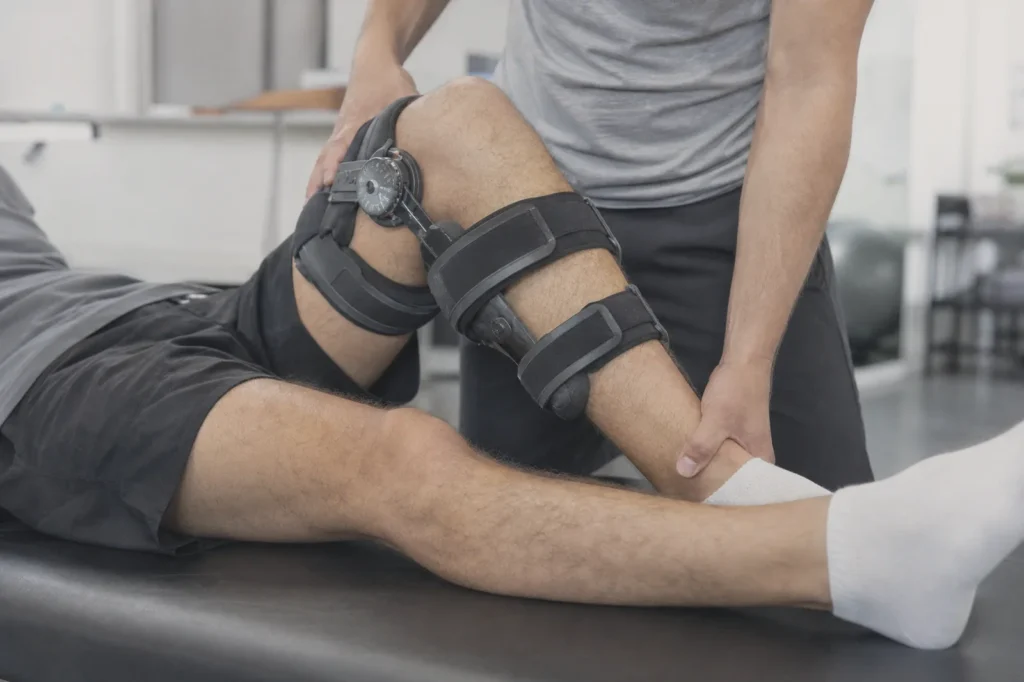
Lost Earning Capacity Is Usually the Largest Number
In a serious claim, the medical bills are rarely the largest number. The largest number is usually what the injury did to a working life.
Somebody who cannot return to the work they did before is not claiming the weeks they missed. They are claiming the difference between what they used to earn and what they can earn now, for as long as that lasts. Over a remaining career that figure frequently exceeds every medical bill in the file combined.
Proving Lost Earning Capacity
It is also the element insurers contest hardest, because it rests on a projection rather than a receipt. Establishing it means vocational assessment of what a person can still do, an earnings history, and an economic analysis reducing a future loss to a present figure. None of that is quick, which is the practical reason a serious claim should not be valued early.
Why a Personal Injury Case Cannot Be Valued on Day One
The honest sequence runs the other way from the way people expect.
A claim cannot be valued until the medical picture is clear, which means until treating physicians can say whether the injury is permanent and what it will need. That point is reached months rather than weeks after an accident, and often later.
Insurer Offers Made Before Treatment Ends
An offer made before then is calculated against an incomplete record. That is not carelessness on the insurer’s part; it is the cheapest point at which a file can be closed. Once it is accepted, whatever the injury turns out to cost after that belongs to you.
Preparing a Claim During Treatment
Starting early and settling early are different things. A claim can be documented, preserved, and prepared while treatment continues, which is the position most serious claims need to be in. Whether that resolves by negotiation or by filing is a separate question, and we cover the difference between the two routes separately.
Paying for a Personal Injury Lawyer
The consultation is free, and there is no cost to find out where your claim stands.
Case costs and expenses are the costs of building a claim, such as filing fees, medical records, and expert witnesses. You pay no attorney fees and no case costs unless we recover money for you. How the attorney fee is calculated, how case costs are handled, and what you would owe in different outcomes are all set out in a written fee agreement that we go over with you before you decide.
Talk to Us Before You Accept a Number
We cannot tell you what your claim is worth on a first call. What we can tell you is which coverages apply, what the insurer is likely to argue, and what the offer in front of you is measured against.
Call us and tell us what happened. Our attorneys bring more than 150 years of combined legal experience, and the firm has recovered hundreds of millions of dollars for injured clients. The consultation is free.
Related Resources
These cover the parts of the calculation in more detail.
-
How Pain and Suffering Is Calculated
The methods used for non-economic loss, and why calculators mislead.
Learn More : How Pain and Suffering Is Calculated -
Florida PIP and No-Fault
What your own coverage pays first after a crash, and where it runs out.
Learn More : Florida PIP and No-Fault -
Uninsured Motorist Claims
What happens when the at-fault driver carries nothing, or not enough.
Learn More : Uninsured Motorist Claims -
Claim or Lawsuit
The difference between negotiating with an insurer and asking a court to decide.
Learn More : Claim or Lawsuit -
Property Damage Claims
The separate claim for your vehicle, which runs on its own track.
Learn More : Property Damage Claims -
All Injury Resources
The full library of guides on how injury claims work in Florida.
Learn More : All Injury Resources
Our Offices and Service Areas
Our Tampa office is in Hyde Park at 601 W Swann Ave., and we handle Hillsborough County claims through the Thirteenth Judicial Circuit.
The firm also has locations in St. Petersburg, Clearwater, New Port Richey, and Lakeland. Tampa is our staffed office, and the other four are available by appointment.
- Tampa, FL 601 W Swann Ave, 33606
- St. Petersburg* 111 2nd Ave NE, Ste 350, 33701
- Clearwater* 1006 Drew St, 33755
- New Port Richey* 5006 Trouble Creek Rd #200, 34652
- Lakeland* 1543 Lakeland Hills Blvd, Ste 18, 33805
* Available by appointment. Tampa is our staffed office.
Get a Free Consultation
Or call now: (813) 223-6200
Questions People Ask Most

What is the average settlement for a case like mine?
There is no useful answer to that question, and the figures published elsewhere describe a mix of cases that have little in common. What decides your claim is the injury, the evidence supporting it, and the coverage available, and those are specific to you.
Can you give me a number on the first call?
No, and treat it as a warning sign if somebody does. A claim cannot be valued until the medical picture is clear. What can be said early is which coverages apply and what the other side is likely to argue.
Why does the offer seem so low?
Because it usually arrives before treatment has finished, and it is calculated against the record as it stands rather than the injury as it will turn out. The parts of the loss that have not been documented yet do not appear in it.
Does the settlement amount reach me in full?
Rarely. Medical providers and insurers can have claims against the same money, and attorney fees and case costs are paid from it under the fee agreement. If there is no recovery, you owe no attorney fees and no case costs.
What can I do to protect the value of my claim?
Keep treating and keep the record complete. Gaps in treatment are read as recovery, and the loss that was never documented is the loss that does not get paid for. Beyond that, do not give a recorded statement or accept an offer before somebody has looked at it.
What factors impact how much a personal injury claim is worth?
Accident victims have the burden of proving the other party caused their injury for that party to be liable for damages. Therefore, the strength of your evidence proving fault is a significant factor that could impact how much your case is worth. Conversely, if your evidence is weak, the insurance company is less likely to offer a high settlement amount.
Other factors that impact the value of a personal injury claim include:
- The type of injuries sustained
- The severity of the injuries, including whether you sustained a permanent impairment or disability
- The duration of your recovery
- Whether you can return to work
- How the injury impacts your daily activities
- Your appearance before and after the accident or injury
- Whether you require future medical, nursing, or personal care
- The cost of your medical treatment and care
- Your percentage of fault for causing your injury
- Can you still enjoy the same activities as you did before the injury?
- Have you been diagnosed with PTSD, depression, or other psychological disorders or conditions?
What damages can I receive for a personal injury claim?
An injured party can receive compensatory damages for their monetary losses, pain, and suffering. In some cases, a victim might also receive punitive damages.
Client reviews
What your neighbors say.
★★★★★ 4.6 average on Google across 536 reviews of our Tampa, St. Petersburg, Clearwater, New Port Richey and Lakeland offices.
“After my accident Winters & Yonkers were there for me. Chris was knowledgeable and made me feel like he cared about my situation. I was very pleased from day 1 and fully recommend Winter’s & Yonkers.”
“After my wreck I called this company, they gave me peace of mind knowing I would be taken care of. I really appreciate all the help and definitely recommend 10/10”
“Chris Smith and the entire WY team went above and beyond to help me settle my claim in record time. Could not be more pleased. I highly recommend Chris for any personal injury issues!”
“If you need a lawyer I highly recommend this practice! Mr. Brown was very professional and was always there to answer any questions I had through the whole process. 5 stars all the way!”
“Matt and Danica at the Tampa office are the absolute best they made sure all my questions were answered and that I was fully informed the entire case!! 100000/10 would recommend them to anyone!”
“I recently hired Winters and Yonker for a personal injury case. My attorney Patrick Brannon was very professional and worked hard to get the case settled in a timely manner. I was extremely pleased with the outcome, and would highly recommend this law firm!”
“I loved Trevor and Bailey. They kept me in the loop the whole time and focused on my getting better. I would absolutely use them again and recommend them to everyone I know!!”
“Amazing people to work with, they completely have your back every step!! Keeping you informed and they truly care they build strong relationships.”
Reviews are from Google and are unpaid. Past results do not guarantee a similar outcome in your case.
