
150+ Years of Combined Experience. Hundreds of Millions Recovered.

What’s the Difference Between a Claim and a Lawsuit?
An insurer has made an offer or stopped answering, and you want to know the difference between a claim and a lawsuit before you decide what comes next. This guide comes from Winters & Yonker, a Tampa Bay firm that handles injury claims and nothing else, and it lays out what filing would change.
Get My Free Case Review
Free consultation, no obligations. If you would rather not type, (813) 223‑6200 is available 24/7.
The Difference Between an Injury Claim and a Lawsuit
People use the two words as though they mean the same thing. They do not, and the difference decides who is making the decisions about your case.
Most Florida injury cases are resolved as claims and never reach a courtroom. Understanding when that changes, and what changes with it, is worth knowing before anyone asks you to sign something.
A claim is a negotiation with an insurer. No one is under oath and no judge is involved. A lawsuit adds sworn discovery, motions, and a court schedule, and the parties can still settle at any point before a verdict.
We keep a litigation team in-house, so a case is built for court from the start, though most settle. If filing becomes the right call, the evidence is already gathered and the decision is yours to make with the facts in hand.
What an Injury Claim Is: A Demand for Compensation
A claim is a legal demand for compensation. In an injury case, it is a demand by the person who was hurt against whoever is legally responsible for the injury, which is usually the party who caused it.
Claims Against an Insurance Company
In practice, most claims are made against an insurance company rather than against a person. The insurer is the one holding the money and the one deciding what to offer, which is why the claim stage is a negotiation rather than a legal proceeding.
No court is involved. Nobody is under oath. There is no judge, no jury, and no deadline imposed by anyone other than the law.

What a Lawsuit Is: When a Florida Court Decides the Claim
A lawsuit is a formal public proceeding in which a court decides whether the claim is valid, and if it is, how much money to award. It runs under rules that do not apply to a claim, including the Florida Rules of Civil Procedure and the Florida Evidence Code.
Every Lawsuit Starts as a Claim
You cannot have a lawsuit without first having a claim. The claim is the underlying demand; the lawsuit is the mechanism for forcing a decision on it when the other side will not agree.
Your Own PIP Coverage Responds First
If your injury came from a traffic crash, your own Personal Injury Protection coverage responds first, regardless of who caused it. That is a no-fault benefits claim, submitted with written notice of the loss and your medical bills, and it runs separately from anything against the at-fault party. A formal demand letter only comes in if the insurer does not pay on time, because Florida law requires one before a lawsuit over overdue PIP benefits. We cover how it works on our PIP and no-fault page.
The Path an Injury Claim Takes: Demand Letter, Negotiation, Settlement
A claim against an at-fault party usually begins with a demand letter from your lawyer to the appropriate insurance company. The letter summarizes what happened, explains why the insurer is liable, and demands payment. It may or may not name a specific figure.
The insurer typically acknowledges the demand and begins its own investigation, which may include requests for records. That is standard, and it is not a rejection.
Negotiating Offers and Counteroffers Before Settlement
What follows is an exchange of offers and counteroffers. Either it ends in a settlement both sides accept, or it does not.
Filing a lawsuit does not end that exchange. The parties can keep negotiating after a suit is filed, right up until a jury returns a verdict, and courts encourage settlement because it clears their dockets. For most parties, filing is either a last resort after negotiations fail or, more often, a way to gain leverage in negotiations that are still running.
Mediation, Arbitration, and Alternative Dispute Resolution
Alternative dispute resolution, usually shortened to ADR, covers the methods of settling a dispute without a trial. Negotiation is technically the most common form, though people using the term usually mean one of the others.
- Mediation, where a neutral third party works with both sides toward a settlement they agree to
- Arbitration, where the parties hire a private decision-maker who imposes a resolution on them
- Less common approaches such as a mock trial, used to test how a case might land with a jury
ADR is generally cheaper and faster than resolving a case at trial, which is part of why so few injury cases reach one.
The Settlement Agreement That Ends a Claim
Never settle a claim on a handshake. A settlement should be recorded in a professionally drafted agreement, and if the other side drafts it, your lawyer should read it closely before you sign anything.
A signed settlement agreement typically ends the claim. It also becomes enforceable in its own right, so if the liable party signs and then refuses to pay, they can be sued on the agreement under contract law.
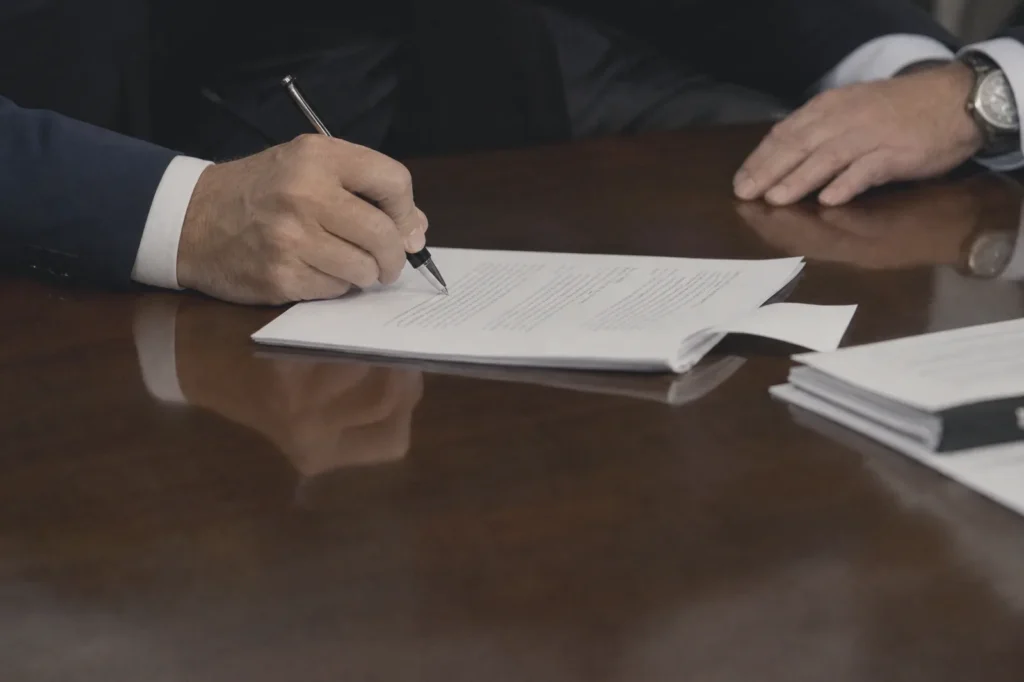
Filing a Lawsuit Involves Three Steps
Filing a lawsuit involves three steps, and the second and third are less straightforward than they sound.
- File a formal complaint with the court clerk. This is a document a lawyer should draft, because every sentence in it has consequences later.
- Pay the court filing fee.
- Notify the defendant that they are being sued. You cannot do this yourself, and precise procedures apply to how it is done.
The defendant usually responds with a formal answer, a document replying to each allegation in the complaint.
Discovery: Depositions and Interrogatories Under Oath
Discovery is the pretrial stage where both sides have to disclose what they have. It is the single biggest practical difference between a claim and a lawsuit, and it uses four main tools.
- Depositions, meaning out-of-court testimony under oath from witnesses each side intends to call
- Interrogatories, written questions the other side must answer under oath
- Demands for production, requiring the other side to hand over documents or physical evidence such as a wrecked vehicle
- Requests for admission, asking the other side to admit facts that are not really in dispute so nobody has to prove them
Evidence that surfaces in discovery frequently restarts stalled negotiations, because one side suddenly knows something that changes what the case is worth.
Motions to Dismiss and for Summary Judgment
A motion is a request asking the judge to do something. Common ones in an injury case include:
- A motion to dismiss, where the defendant asks the judge to throw the case out
- A motion in limine, where a party asks the judge to keep specific evidence out of the trial
- A motion for summary judgment, where a party argues the facts are not genuinely in dispute and the case can be decided without a trial
- A motion for change of venue, where a party asks for the case to be heard somewhere else
A single lawsuit can involve dozens of motions, most of which the client never has to think about.
Trial Before a Jury or Judge
At trial the parties question witnesses, present evidence, and argue their positions, and the court imposes a resolution. Usually a jury decides. In some cases a judge does.
Three Things That Change When You File a Lawsuit
This is the part most people actually want to know, and it comes down to three things.
Time Added by a Lawsuit
Time. A claim can resolve in weeks or months. A lawsuit adds a year or more, because discovery, motions, and court scheduling all take time that a negotiation does not.
Discovery and Sworn Disclosure
Disclosure. In a claim, you choose what to share. In a lawsuit, you largely do not. Discovery means answering questions under oath, handing over records, and sitting for a deposition. Medical history, employment history, and sometimes social media all become fair territory.
Control Over the Final Decision
Who decides. In a claim, you decide whether to accept an offer. In a lawsuit that goes to verdict, a jury decides, and neither side controls what they conclude. That uncertainty is exactly why most cases settle before anyone finds out.
None of that makes filing the wrong move. It makes it a decision worth understanding before it is taken rather than after.
Claim Value and What Your Case Is Actually Worth
Whether a case settles as a claim or proceeds as a lawsuit, the same question sits underneath it: what is the claim actually worth. That depends on the injuries, the treatment still to come, the effect on your ability to work, and how much insurance coverage exists. We set out how those factors interact on our claim value page.
Early Settlement Offers
An offer made before that work is done is an offer made against an incomplete number, which is the practical reason not to settle early rather than a legal one.
Talk to Us Before You Talk to the Insurer
A lawyer can handle either route. Negotiating a claim with an insurer, or filing and running a lawsuit if the insurer will not move.
Call us and tell us what happened. We will tell you where you stand and which of those two you are likely looking at. Our attorneys bring more than 150 years of combined legal experience, and the firm has recovered hundreds of millions of dollars for injured clients. The consultation is free.
Related Resources
These cover the questions that come up alongside this one.
-
Florida PIP and No-Fault
What your own coverage pays first after a crash, and where it runs out.
Learn More : Florida PIP and No-Fault -
What a Claim Is Worth
The factors that decide the value of an injury claim, and why coverage limits often matter more than the injury.
Learn More : What a Claim Is Worth -
Property Damage Claims
The separate claim for your vehicle, which runs on its own track from the injury claim.
Learn More : Property Damage Claims -
Car Accidents
The most common source of injury claims in Florida, including how no-fault coverage applies.
Learn More : Car Accidents -
Questions to Ask a Lawyer
What to ask during a free consultation before you decide who to work with.
Learn More : Questions to Ask a Lawyer -
All Injury Resources
The full library of guides on how injury claims work in Florida.
Learn More : All Injury Resources
Our Offices and Service Areas
Our Tampa office is in Hyde Park at 601 W Swann Ave., and we handle Hillsborough County claims through the Thirteenth Judicial Circuit.
The firm also has locations in St. Petersburg, Clearwater, New Port Richey, and Lakeland. Tampa is our staffed office, and the other four are available by appointment.
- Tampa, FL 601 W Swann Ave, 33606
- St. Petersburg* 111 2nd Ave NE, Ste 350, 33701
- Clearwater* 1006 Drew St, 33755
- New Port Richey* 5006 Trouble Creek Rd #200, 34652
- Lakeland* 1543 Lakeland Hills Blvd, Ste 18, 33805
* Available by appointment. Tampa is our staffed office.
Get a Free Consultation
Or call now: (813) 223-6200
Questions People Ask Most

Does filing a lawsuit mean my case is going to trial?
Almost never. Most cases that are filed still settle, often well before a trial date. Filing is frequently a way to move a negotiation that has stalled rather than a decision to put the case in front of a jury.
Can I still negotiate after a lawsuit is filed?
Yes. The two run alongside each other. Offers and counteroffers continue after filing, and a case can settle at any point before a verdict.
Do I have to be in court?
Usually not much, and rarely for long. Most of a case happens in writing and in negotiation. Where you are needed, it is generally for a deposition rather than a courtroom appearance, and you are prepared for it beforehand.
How do I know which route my case is on?
You will be told, and the decision is yours to make with advice rather than one taken for you. What changes between the two is the time it takes, how much you have to disclose, and who ultimately decides the outcome.
What is a claim?
A claim is a legal demand for compensation. In the personal injury context, a claim is a demand by an injured person for compensation from someone who is legally liable for the injury. This party is usually the party that caused the injury. Most injured people, however, file claims against insurance companies.
Client reviews
What your neighbors say.
★★★★★ 4.6 average on Google across 536 reviews of our Tampa, St. Petersburg, Clearwater, New Port Richey and Lakeland offices.
“My experience with winters and yonker has been amazing they keep in the loop with no guessing if you need help ask for Chris if I ever need help again Im asking for him by name Thank u Chris”
“Trevor and his team were very kind and caring. Very professional and they did a great job helping me with my physical therapy, referrals doctors and my settlement. I appreciated their continued care and business. Thanks again!”
“Absolutely an amazing Law firm. They handled my case that happened to be a more difficult case but handled it with ease. They were professional and communicated very well every step of the way. Honestly they took the stress out of a stressful situation. Patrick, Tony and Tayler all went above and beyond! I highly recommend them to anyone in need.”
“Truly grateful for what my lawyer Trevor W.Colvin And his team did for me from day one. Make sure to get me the money that I deserve for an accident that was not my fault. Definitely recommend this law firm they truly do care about you.”
“Great law firm! I dealt with Trevor and had no issues , only prompt , communicative , empathetic service ! My cousin Rashida referred me who also had great service ! Very pleased ! God bless”
“Patrick and Tayler are amazing. We didn’t have a big claim and it wasn’t going to be very much money for anyone, but they still handled our numerous hurdles and concerns like total masters. 10/10 would highly recommend.”
“My experience with Patrick Brannon, Anthony logalbo and their whole staff were incredible in handling my case. I am very grateful that I chose them as my legal representation. I will definitely recommend to anyone. that need legal representation.”
“I just want to say that I worked with Tony and Debbie and they are absolutely wonderful. Very knowledgeable professional they. Held my hand through the whole process. And explained everything so well so that I knew each step of the way. Excellent 5 star service. So happy to be working with them.”
Reviews are from Google and are unpaid. Past results do not guarantee a similar outcome in your case.
