
150+ Years of Combined Experience. Hundreds of Millions Recovered.

Tampa Bad Faith Insurance Lawyer
Your insurer, or the other driver’s, refused a fair settlement it could have made, and a Tampa bad faith insurance lawyer can work to hold it to account. We build the written record and the civil remedy notice these claims depend on. The consultation is free.
Get My Free Case Review
Free consultation, no obligations. If you would rather not type, (813) 223‑6200 is available 24/7.
Aggressive Tampa Bad Faith Insurance Attorneys
Bad Faith Insurance Is More Than Refusing to Pay
An insurer that owes you money and will not pay it is not always acting in bad faith. Sometimes it is, and Florida gives you a way to do something about it.
Certain statutory bad-faith claims require a formal notice before the bad-faith lawsuit can be filed. That hands the company a statutory sixty days to make the problem go away. Getting it right is most of the work. For common law bad faith claims, which primarily apply to third-party insurance claims, the insurer may have ninety days to address their violations.
These cases split by whose policy is involved. A claim against your own insurer exists only under the statute and its notice rules. A claim against a liability insurer that failed to settle within its limits can also rest on common law.
Our in-house litigation team treats the notice as the foundation of the bad faith case. A notice that states the violation vaguely or cites the wrong provision can leave the insurer nothing to cure, and the claim can fail before it starts.
Insurance Bad Faith Under Florida Statutes Section 624.155
Under Florida Statutes section 624.155, an insurer commits bad faith when it does not attempt in good faith to settle a claim where, under all the circumstances, it could and should have done so had it acted fairly and honestly toward its insured and with due regard for their interests.
The 2023 civil remedies legislation raised the bar on that. Negligence alone is not bad faith. An adjuster who makes a mistake, misreads a file, or takes too long through simple disorganization has not committed bad faith. What the statute reaches is conduct that goes beyond carelessness.
The Claimant’s Conduct Under the 2023 Bad Faith Law
The same legislation allows a court to consider whether the person making the claim acted in bad faith too, which is a change worth knowing about before a claim is built.

First-Party and Third-Party Bad Faith Claims, Different Rules
The distinction matters more than almost anything else on this subject, and it is routinely collapsed into a single explanation that fits neither.
First-Party Bad Faith: Your Own Insurer
You have a policy, you make a claim for insurance benefits under it, and your own company denies, delays, or underpays. Health coverage, property coverage, uninsured motorist coverage, and PIP all sit here.
In Florida, first-party bad faith exists only under the statute. There is no common law first-party bad faith claim, which means the statutory route and its notice requirement is the only route available.
Third-Party Bad Faith: Somebody Else’s Insurer
Someone with liability coverage injures you, their insurer had the chance to settle within the policy limits and did not, and a judgment lands on their insured for more than the policy would have paid.
Third-party bad faith can run under the statute or under Florida common law. A common law third-party claim carries no pre-suit notice requirement, which means the insurer cannot avoid it simply by paying up once a notice arrives. Judgment is available under one route or the other, not both.
The Civil Remedy Notice That Starts the Bad Faith Clock
This is the procedural heart of a Florida bad faith claim and the part most often handled badly.
Before a statutory bad faith action can be brought, the Department of Financial Services and the insurer both have to be given sixty days written notice of the violation. That notice is the civil remedy notice, filed electronically with the department.
The Insurer’s 60-Day Cure Period
The insurer then has sixty days to pay the damages owed or to correct the circumstances that gave rise to the violation. If it does either within that window, no statutory bad faith action lies at all. The cause of action does not accrue until the cure period has run without the company acting.
So the notice is not a formality. It is an invitation to the insurer to fix the problem and extinguish the claim, and a well-drafted one frequently prompts payment inside the sixty days. That is a good outcome for a policyholder who wanted the money rather than the lawsuit.
Civil Remedy Notice Requirements
What the notice has to contain is the part that decides whether the claim survives. The requirements are strictly construed, and actual knowledge on the insurer’s part is not a substitute for the statutory notice. A notice that states the violation vaguely, cites the wrong provision, or omits the facts supporting it can leave the insurer with nothing specific to cure and the claim with nothing to stand on.
Two timing points sit alongside it. The limitation period is tolled for sixty days after the insurer receives the notice. And in a residential property claim where appraisal has been invoked, a notice cannot be filed for sixty days after that.
Case Results
Hundreds of Millions Recovered Since 2001
- $5,000,000Auto accident
- $3,050,000Auto negligence settlement
- $3,000,000Auto negligence settlement
Figures are shown before attorney fees, case costs, and medical liens. Past results do not guarantee or predict a similar outcome in any future case.
Conduct That Gives Rise to a Tampa Bad Faith Insurance Claim
The behavior that supports these claims recurs.
- Denying a claim without conducting a reasonable investigation
- Unreasonable delays in a decision or a payment, without explanation
- Making lowball settlement offers, substantially less than the claim is worth, and refusing to move
- Failing to explain the basis for a denial
- Misrepresenting what the policy says or what it covers
- Ignoring correspondence, calls, or requests for a decision
- Demanding documents already provided, or documents the policy does not require
- Failing to settle within policy limits where the opportunity existed and the exposure was clear
Documenting a Pattern of Bad Faith Claim Handling
A single instance is not necessarily bad faith. A pattern of them, documented, is what these claims are built from. The statute also says that a person pursuing this remedy does not have to prove the conduct happened often enough to amount to a general business practice, which matters because an insurer will frequently argue that one file proves nothing.
When an Insurance Claim Denial Is Not Bad Faith
Not every denial is bad faith, and a page that pretends otherwise is not much use to somebody trying to work out where they stand.
An insurer is entitled to deny a claim that falls outside the policy, to dispute the value of a loss, to investigate before paying, and to reach a different view of the facts than the policyholder does. Disagreement is not bad faith. Being wrong is not bad faith on its own either, since negligence alone does not meet the standard.
Reasonable Basis for a Claim Denial
What separates the two is whether there was a reasonable basis for what the company did. A denial supported by a real investigation and a defensible reading of the policy is a dispute. A denial with nothing behind it, or a delay with no explanation, is something else.
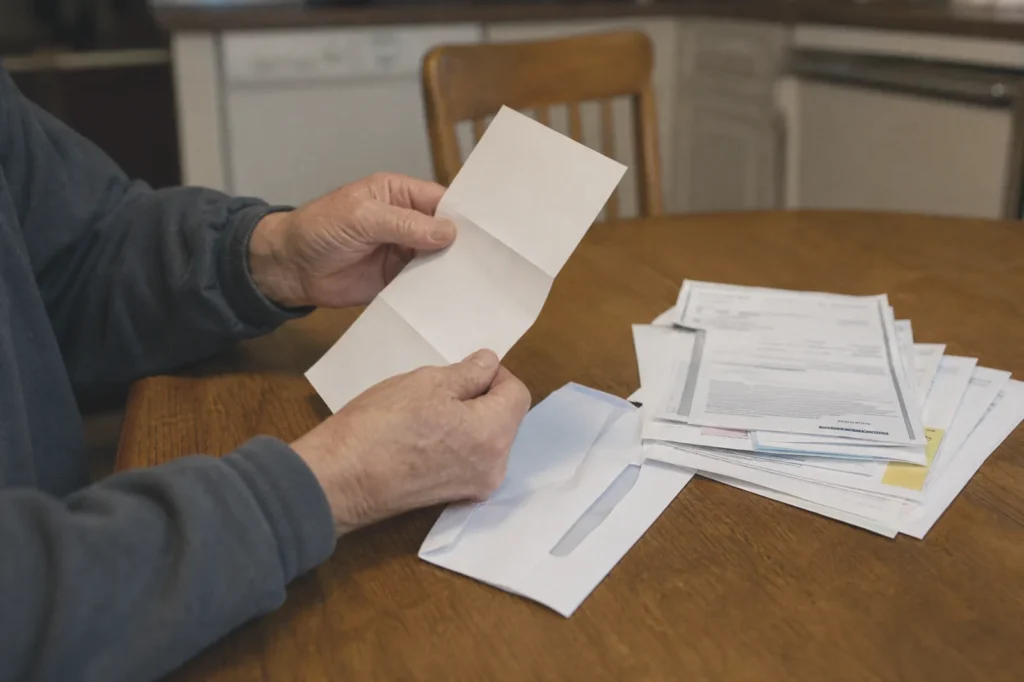
Build a Bad Faith File While the Insurance Claim Sits
Most of what makes a later claim provable is created while the current one is being ignored.
- Put every request in writing, including requests you have already made by phone
- Ask for the specific policy provision the company is relying on, in writing
- Keep a dated log of every call, who you spoke to, and what was said
- Keep copies of everything sent and received, including envelopes with postmarks
- Set your own deadlines in correspondence and record when they pass
- Send documents by a method that produces proof of delivery
Written Proof of an Ignored Claim
A file that shows a company was asked plainly, repeatedly, and in writing, and did not answer, is a different file from one containing a memory of several phone calls.
Proving Insurance Bad Faith and What It Recovers
These claims are proved with the insurer’s own records. The claim file, the adjuster notes, internal correspondence, the investigation as it was actually conducted, and the company’s handling of comparable claims are all obtainable.
Bad Faith Damages Beyond the Policy Limits
Where bad faith is established, recovery can exceed what the policy would have paid. It can include the amount owed under the policy, damages caused by the company’s conduct, and in a third-party case the excess judgment entered against the insured beyond the policy limits.
That last point is what makes third-party bad faith consequential. An insurer with a small policy and a large exposure has an incentive to take the risk of trial rather than settle, because the policy caps what it pays without bad faith. Where it makes that choice badly and a judgment lands on its own insured for the difference, the insured has a claim for the excess and can assign it.
There is a deadline on the underlying claim and a separate one on the bad faith action, and the notice requirement sits in front of both. Ask which applies to your situation rather than assuming one covers everything.
Bad Faith Claims Follow the Underlying Claim
The order these happen in is worth understanding early. A bad faith claim generally follows the resolution of the underlying claim rather than running alongside it, because what the company did has to be measured against what it turned out to owe. That sequencing is the reason these cases take longer than people expect, and it is not a sign that nothing is happening.
Paying for a Tampa Bad Faith Insurance Lawyer
The consultation is free, and there is no cost to find out where your claim stands.
Case costs and expenses are the costs of building a claim, such as filing fees, medical records, and expert witnesses. You pay no attorney fees and no case costs unless we recover money for you. How the attorney fee is calculated, how case costs are handled, and what you would owe in different outcomes are all set out in a written fee agreement that we go over with you before you decide.
Talk to Us Before the Notice Goes Out
A notice that does not state the violation precisely gives the insurer nothing specific to cure, and the claim built on it has a weaker foundation than it needed.
Call us and tell us what the company has done. We will tell you where you stand. Our attorneys bring more than 150 years of combined legal experience, and the firm has recovered hundreds of millions of dollars for injured clients. The consultation is free.
Related Claims We Handle
Bad faith usually arrives attached to another claim.
-
Uninsured Motorist Claims
A claim against your own insurer is where first-party bad faith most often arises.
Learn More : Uninsured Motorist Claims -
Florida PIP and No-Fault
Denied and delayed no-fault benefits are among the most common first-party disputes.
Learn More : Florida PIP and No-Fault -
Property Damage Claims
Undervalued vehicle and property losses, and what to do when the number does not hold up.
Learn More : Property Damage Claims -
Bad Faith Claims in New Port Richey
Pasco County claims against an insurer, handled from our New Port Richey office.
Learn More : Bad Faith Claims in New Port Richey -
Bad Faith Claims in Clearwater
Pinellas County claims against an insurer, handled from our Clearwater office.
Learn More : Bad Faith Claims in Clearwater -
Bad Faith Claims in Lakeland
Polk County claims against an insurer, handled from our Lakeland office.
Learn More : Bad Faith Claims in Lakeland
Our Offices and Service Areas
Our Tampa office is in Hyde Park at 601 W Swann Ave., and we handle Hillsborough County claims through the Thirteenth Judicial Circuit.
The firm also has locations in St. Petersburg, Clearwater, New Port Richey, and Lakeland. Tampa is our staffed office, and the other four are available by appointment.
- Tampa, FL 601 W Swann Ave, 33606
- St. Petersburg* 111 2nd Ave NE, Ste 350, 33701
- Clearwater* 1006 Drew St, 33755
- New Port Richey* 5006 Trouble Creek Rd #200, 34652
- Lakeland* 1543 Lakeland Hills Blvd, Ste 18, 33805
* Available by appointment. Tampa is our staffed office.
Get a Free Consultation
Or call now: (813) 223-6200
Questions People Ask Most
My claim was denied. Is that bad faith?
Not by itself. An insurer is entitled to deny a claim that falls outside the policy, to dispute the value of a loss, and to reach a different view of the facts than you do. What matters is whether there was a reasonable basis for the decision and whether the company actually investigated before making it.
Can I bring a claim against my own insurance company?
Yes. A claim against your own insurer is the most common form this takes, and it arises where the company denies, delays, or underpays something the policy covers. Paying premiums does not put you on the same side of the table once a claim is made.
What do I need to keep while the claim is being delayed?
Everything, and in writing where you can manage it. A dated log of calls, copies of everything sent and received, and written requests for decisions. A file showing a company was asked plainly and did not answer is worth considerably more than a recollection of phone calls.
How long does this kind of claim take?
Longer than an ordinary claim, because there is a required notice period and the insurer has a window to respond to it. Many resolve during that window, which is usually the outcome a policyholder wanted in the first place.
What is the deadline for filing a bad faith insurance claim in Florida?
There is a deadline on the underlying claim and a separate one on the bad faith action, and the notice requirement sits in front of both. Before a statutory bad faith action can be brought, the Department of Financial Services and the insurer both have to be given sixty days written notice of the violation. The limitation period is tolled for sixty days after the insurer receives the notice. Ask which applies to your situation rather than assuming one covers everything.
What can be recovered beyond what the policy owed?
Potentially more than the policy amount, depending on what the company did and what it cost you. That is the point of the remedy, and it is also why these claims are worth building carefully rather than quickly.
What is bad faith insurance?
A party acts in bad faith when they use fraud or dishonesty during a transaction. It can include failing to use fair practices in dealing with someone, behaving with fraudulent intent, or being untrustworthy in the performance of duties. We refer to bad faith when we discuss the obligation between parties to a contract to act in good faith and fairly when dealing with each other.
An insurance company has a duty to act in good faith when dealing with a policyholder or claimant. The company must make reasonable efforts to investigate and settle claims. Bad faith insurance practices involve misleading, dishonest, and/or fraudulent conduct and tactics.
Client reviews
What your neighbors say.
★★★★★ 4.6 average on Google across 536 reviews of our Tampa, St. Petersburg, Clearwater, New Port Richey and Lakeland offices.
“Excellent service from Matt and Danica. Everything was fully explained from the beginning through to the settlement of my claim. I’d definitely use them again if ever needed. Thanks to the entire firm.”
“Matt an Danica were the best they kept in touch every step of the way an got my case handled quickly I couldn’t be happier with my team at winters an Yonker”
“My experience with Winters and Yonker was excellent from beginning to end. Mr. Smith explain details to me in a simple way. I didn’t have any worries with insurance company, they took care of everything, so I could just worry about getting better. They were all extremely courteous and professional threw the whole process with me, but aggressive with insurance company. I totally recommend them.”
“I want to thank my Attorney Christopher Smith at Winters & Yonkers, P.A. Attorneys At Law for their amazing business in getting the job done.”
“Great communication. My attorney Chris was outstanding he answered my questions and always spoke to me when I called. Honestly it was an unexpected great experience. Thanks”
“Having never been through litigation, I chose Winters and Yonkers. I knew I had picked the right attorney to represent me from the beginning. The team at Winters and Yonkers were great to work with and guided me through the process. The process was long, and I knew I was in good hands with my excellent communication and interactions with the team. In the end, we won an excellent settlement.”
“Alexis and Lauren did an outstanding job at helping me with my case! They made sure to update me and always answered my questions. I can’t say enough of how professional and thorough they were with follow ups and making sure I was taken care of. They treated me like family and it was such a refreshing and positive experience working with them. I will definitely be coming back to them if I ever need to!”
“I am so grateful I chose Winters and Yonkers after my car accident. I thank you all kindly for helping me through that tough time.”
Reviews are from Google and are unpaid. Past results do not guarantee a similar outcome in your case.
