
150+ Years of Combined Experience. Hundreds of Millions Recovered.
Tampa Swimming Pool Drowning Lawyer
When a child drowns or nearly drowns, a Tampa swimming pool drowning lawyer starts with the pool itself. We measure the fence, gate, alarm, or cover against Florida’s pool safety law. Then we work to hold the owner to account where the pool fell short.
Get My Free Case Review
Free consultation, no obligations. If you would rather not type, (813) 223‑6200 is available 24/7.
Aggressive Tampa Swimming Pool Drowning Attorneys
Tampa Pool Drownings and the Condition of the Pool
Pool drownings are not usually the result of a parent looking away. Florida’s Legislature has found that when lapses in supervision occur, a pool safety feature designed to deny, delay, or detect a child’s entry will reduce drownings.
If your family has lost a child or is caring for one who survived, the question worth answering is whether the pool met the standard Florida sets. Winters & Yonker has represented families across Tampa Bay since 2001. Our attorneys bring more than 150 years of combined legal experience, and the firm has recovered hundreds of millions of dollars for injured clients. The consultation is free.
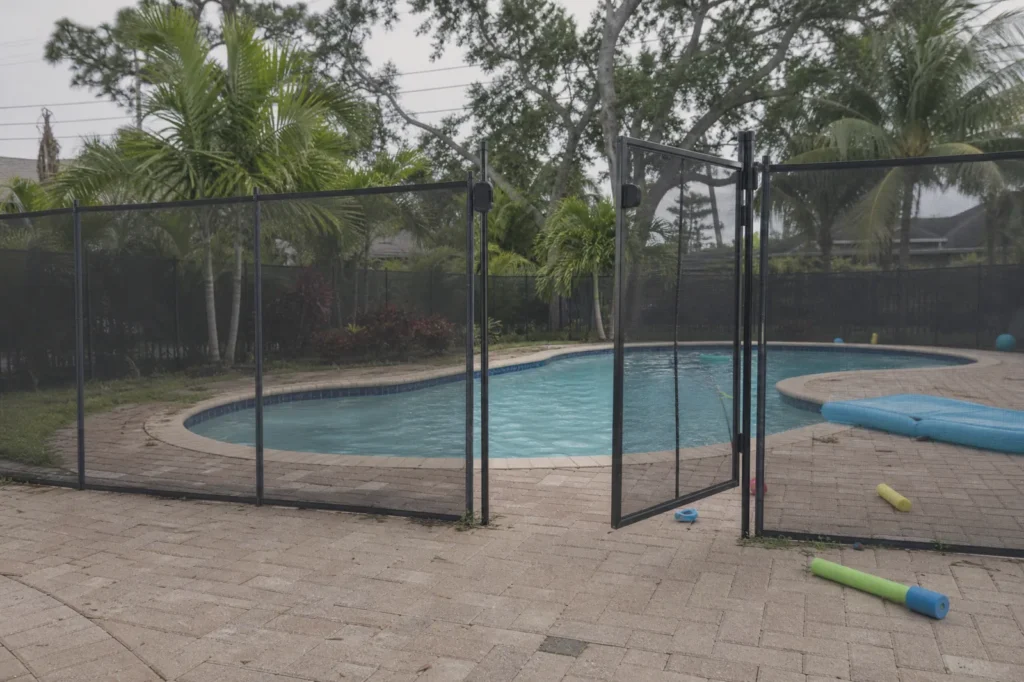
The barrier rules can be checked with a tape measure. A fence has to stand at least 4 feet tall, with no gap a small child could slip through. Its gates have to swing outward and latch on their own. The claim often starts with the gap between that rule and the pool as it stood.
Gates and latches tend to get fixed within days of a drowning. So we move fast to record the pool before repairs change it. Our in-house litigation team builds the case as if it will be tried.
Florida’s Residential Swimming Pool Safety Act Barrier Standard
Most pages will tell you a pool owner must take reasonable steps to keep children out. Florida is more specific than that. Under the Residential Swimming Pool Safety Act, section 515.27 requires a residential pool to have at least one of five safety features before it can pass final inspection.
- A barrier meeting the requirements of section 515.29
- An approved safety pool cover
- Exit alarms on every door and window with direct access from the house to the pool, sounding at a minimum of 85 decibels at 10 feet
- Self-closing, self-latching devices on those doors, with the release mechanism no lower than 54 inches above the floor
- A pool alarm that sounds when someone enters the water
Where a barrier is used, section 515.29 sets out what it has to be. At least four feet high measured from the outside. No gaps, openings, indentations, protrusions, or structural components that could let a young child crawl under, squeeze through, or climb over. Placed around the perimeter of the pool. Gates must open outward, away from the water, and be self-closing and self-latching. On an above-ground pool, ladders and steps must be lockable, removable, or separately enclosed.
Penalties for Missing Pool Safety Features
Failing to fit at least one safety feature on a new residential pool is a second-degree misdemeanor. If a gate swung inward, a fence was three feet rather than four, or a latch had been broken for months, that is not a detail. It is a measurable failure against a standard the law already set.
Older Pools and Commercial Pool Standards
These requirements apply to residential pools built since October 2000. Public, hotel, and apartment pools carry their own obligations, and a pool that met code when built can still be maintained so badly that it no longer does.
Case Results
Hundreds of Millions Recovered Since 2001
- $400,000Trip and fall
- $300,000Slip & fall
Figures are shown before attorney fees, case costs, and medical liens. Past results do not guarantee or predict a similar outcome in any future case.
Swimming Pool Hazards That Cause Drownings
Some drownings come down to supervision. Many come down to the condition of the pool itself.
- Insufficient fencing, gates, latches, or barriers
- Broken or missing drain covers, and dangerous drain suction
- Absence of lifeguards, or lifeguards who were poorly trained
- Lack of warning signs and depth markings
- Missing or inadequate safety and rescue equipment
- Diving board malfunctions and slide defects
- Faulty ladders and steps
- Unsafe pool design and shallow-water diving hazards
- Electrocution risk from pool lighting and equipment
- Chemical burns from mishandled pool chemicals
- Delays in emergency response
. Equipment failures may be relevant to determining whether the property owner or another responsible party negligently maintained the pool. According to the Centers for Disease Control and Prevention, drowning is the leading cause of death for children ages 1 to 4, and the drowning death rate in that age group rose 28 percent between 2019 and 2022.
Drowning Is Not the Only Outcome: Traumatic Brain Injury
A child who is pulled from the water and revived has survived a drowning, not avoided one. Oxygen deprivation lasting minutes can cause a traumatic brain injury with permanent consequences, and drain suction can cause severe internal injuries.
These are the cases where the cost does not end. Ongoing therapy, assistive equipment, home modification, and in the most serious cases lifetime care. A claim has to account for what the next forty years will cost, not only what the hospital charged this month.
Pool Owner Liability Depends on the Pool and the Visitor
Florida sorts visitors into invitees, licensees, and trespassers, and each is owed a different duty. A guest at a public pool or a water park is usually an invitee, owed the highest duty. A guest at a private pool is usually a licensee. We set that framework out in full on our premises liability page.
The Attractive Nuisance Doctrine
Children are the exception that matters here. Under the attractive nuisance doctrine, a pool owner has to take reasonable steps to keep children away from the water even where the child had no permission to be on the property. A pool is the textbook example of an attractive nuisance, and the barrier requirements above are what reasonable steps look like in practice.
Responsibility may sit with a homeowner, a landlord, a homeowners association, an apartment complex, a hotel, or a public facility operator. Each carries different insurance, and identifying the right one early matters.
Deadlines That Can End a Pool Drowning Claim
Most Florida claims of this kind must be filed within two years of the date of the incident. and the same two years applies where a drowning proves fatal. That window was shortened from four years on March 24, 2023, so incidents before that date may still fall under the longer one. Where a drowning proves fatal, a wrongful death claim carries two years from the date of death, a deadline that did not change in 2023.
Preserving Pool Barrier Evidence
The physical evidence moves faster than the deadline. Gates get repaired, latches get replaced, and drain covers get fixed within days of an incident. Photographs taken early, and a request that the property owner preserve what is there, are often what makes a case provable later.
Paying for a Tampa Swimming Pool Drowning Lawyer
The consultation is free, and there is no cost to find out where your claim stands.
Case costs and expenses are the costs of building a claim, such as filing fees, medical records, and expert witnesses. You pay no attorney fees and no case costs unless we recover money for you. How the attorney fee is calculated, how case costs are handled, and what you would owe in different outcomes are all set out in a written fee agreement that we go over with you before you decide.
Talk to Us When You Are Ready
There is no right time to make this call and no obligation attached to making it. If you want to know whether the pool met the standard, we can find out and tell you plainly, whether or not that leads anywhere.
Call us when you are ready. The consultation is free.
Related Claims We Handle
A drowning claim usually touches at least one of these.
-
Premises Liability
The duty a property owner owed you, and how it changes depending on why you were on the property.
Learn More : Premises Liability -
Child Injuries
Claims brought on behalf of a child follow their own rules, including how a settlement is approved.
Learn More : Child Injuries -
Brain Injuries
A child revived after a drowning may have lasting brain injury from oxygen deprivation.
Learn More : Brain Injuries -
Wrongful Death
Where a drowning proves fatal, the claim follows a separate framework with its own rules about who may bring it.
Learn More : Wrongful Death
Frequently Asked Questions
How do swimming pool drowning accidents happen?
Drowning accidents in swimming pools can occur due to a variety of reasons. Sometimes, these tragic events stem from inadequate supervision. Other times, they are the result of unsafe conditions in or around the pool.
Possible causes of pool accidents include:
- Lack of sufficient warning signs
- Inadequate safety equipment
- Insufficient fencing, gates, latches, or barriers
- Diving board malfunctions
- Slide defects
- Faulty ladders
- Absence of lifeguards or poorly trained lifeguards
- Poorly secured pool drains
- Risk of electrocution
- Chemical irritants and burns from pool chemicals
- Diving into shallow water
- Dangerous drain suction
- Lack of life jackets or life-saving devices when needed
- Excessive alcohol consumption by pool users
- Unsafe pool design
- Insufficient emergency equipment
- Delays in emergency response
Swimming pools represent one of the most dangerous recreational environments for both children and adults.
According to the CDC, approximately 11 people die from drowning every day in the United States, with many of these drownings involving children under the age of 14.
Who is liable for swimming pool drowning accidents in Tampa, FL?
There are typically three categories of “entrants” to a swimming pool or water property: invitees, licensees, and trespassers. Each category comes with different levels of responsibility and liability for the pool owner, making every pool death lawsuit unique.
Visitors to public pools or water parks are usually classified as invitees. Pool owners have a duty to maintain the pool and ensure a safe environment for these guests. Guests at a private pool are generally considered licensees. In such cases, pool owners must inform visitors of any safety hazards that are not immediately obvious.
Under the attractive nuisance doctrine, pool owners are required to take reasonable steps to prevent access to pools by minors, such as installing a fence or other barriers.
Many drownings result from property owner negligence. As such, negligence often plays a crucial role in both drowning and near-drowning incidents. Owning a pool typically entails responsibilities like supervision, adequate fencing, and covering the pool when it is not in use.
In cases involving a death at a swimming pool, premises and product liability laws can be applied to hold negligent parties accountable.
Our Offices and Service Areas
Our Tampa office is in Hyde Park at 601 W Swann Ave., and we handle Hillsborough County claims through the Thirteenth Judicial Circuit.
The firm also has locations in St. Petersburg, Clearwater, New Port Richey, and Lakeland. Tampa is our staffed office, and the other four are available by appointment.
- Tampa, FL 601 W Swann Ave, 33606
- St. Petersburg* 111 2nd Ave NE, Ste 350, 33701
- Clearwater* 1006 Drew St, 33755
- New Port Richey* 5006 Trouble Creek Rd #200, 34652
- Lakeland* 1543 Lakeland Hills Blvd, Ste 18, 33805
* Available by appointment. Tampa is our staffed office.
Get a Free Consultation
Or call now: (813) 223-6200
Client reviews
What your neighbors say.
★★★★★ 4.6 average on Google across 536 reviews of our Tampa, St. Petersburg, Clearwater, New Port Richey and Lakeland offices.
“Very friendly and explained every detail in the case to me. Kept me updated on the case. And settled my case in a fast and timely manner. Chris and Sara were great to deal with. I highly recommend winters and Yonkers..”
“This is the second time we have had to use Chris’ services and although he did a great job both times, I can honestly say I hope we never have to again. He made the recovery process after being in car accidents very smooth and fairly fast. Thanks Chris!”
“After my accident Winters & Yonkers were there for me. Chris was knowledgeable and made me feel like he cared about my situation. I was very pleased from day 1 and fully recommend Winter’s & Yonkers.”
“After my wreck I called this company, they gave me peace of mind knowing I would be taken care of. I really appreciate all the help and definitely recommend 10/10”
“Chris Smith and the entire WY team went above and beyond to help me settle my claim in record time. Could not be more pleased. I highly recommend Chris for any personal injury issues!”
“If you need a lawyer I highly recommend this practice! Mr. Brown was very professional and was always there to answer any questions I had through the whole process. 5 stars all the way!”
“Matt and Danica at the Tampa office are the absolute best they made sure all my questions were answered and that I was fully informed the entire case!! 100000/10 would recommend them to anyone!”
“I recently hired Winters and Yonker for a personal injury case. My attorney Patrick Brannon was very professional and worked hard to get the case settled in a timely manner. I was extremely pleased with the outcome, and would highly recommend this law firm!”
Reviews are from Google and are unpaid. Past results do not guarantee a similar outcome in your case.
